Feature
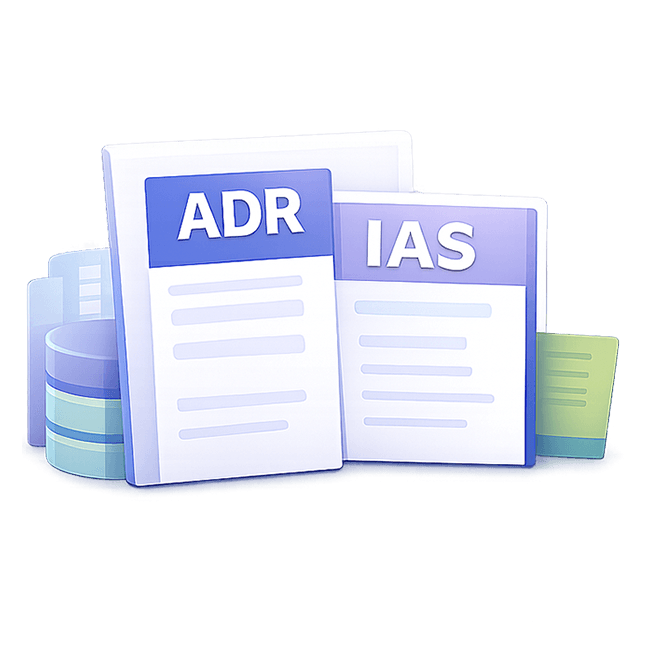
Structured ADR & IAS Records
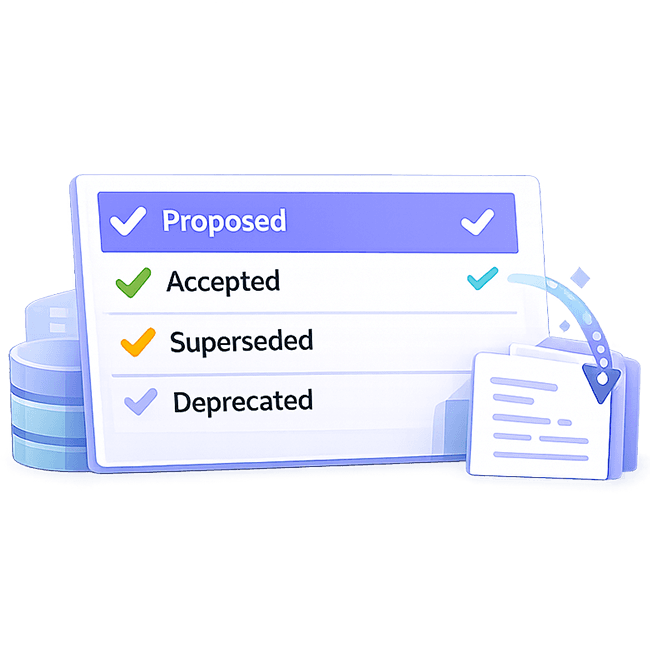
Enforce decision metadata (status, scope, ownership, review cadence) and keep rationale attached to code changes across time.

Osono Archivia™ is an Architecture Governance Platform that keeps architectural intent explainable, defensible, and current, without breaking engineering flow.
Decisions stay attached to their rationale, scope, and review history.
Standards, controls, and exceptions are linked rather than scattered.
Governance evolves with delivery instead of decaying in a wiki.
Mapped to standards, obligations, and live evidence.
Tracked with ownership, rationale, expiry, and review history.
Every week, architectural decisions are made across your teams. Some are deliberate, some are incidental — but almost none of them are recorded in a way that survives. The rationale disappears. The constraints that shaped the decision are forgotten. Six months later, a different team solves the same problem differently, and nobody notices until the inconsistency becomes a problem you have to unpick at the worst possible moment.
You have principles. You have patterns. You probably have a Confluence space that nobody reads. But there is no connective tissue between your obligations, your controls, your decisions, and the systems your teams are actually building. You know the thread exists — you just can't show it to anyone.
That gap shows up in the codebase. Inconsistent quality, reinvented patterns, and technical debt that accumulates not because your engineers don't care, but because good intent without shared structure produces drift. Always.
The tools available to you were built for someone else. GRC platforms assume a compliance function that most engineering organisations don't have. Wikis and spreadsheets can capture information but can't enforce relationships, trace lineage, or tell you when something has fallen out of alignment.
There's a better way to run this — no ceremony, no friction, just durable architectural intent.

Opinionated templates, clear governance, and durable traceability — built for teams that ship continuously and operate systems for years.
Enforce decision metadata (status, scope, ownership, review cadence) and keep rationale attached to code changes across time.
Connect decisions to services, domains, standards, and guides — so teams can find the "why" in seconds, not hours.
Lightweight reviews, clear lifecycle states, and audit-ready history — without turning architecture into a bureaucracy.
Track how architectural decisions evolve over time with explicit supersession chains, validity windows, and review prompts — so teams know which decisions still apply, which have changed, and why.
Tie decisions directly to architectural standards, compliance controls, and approved exceptions, with rationale and expiry captured once and reused everywhere — creating built-in defensibility without duplicating effort.
Get contextual recommendations grounded in your own architecture: surface similar past decisions, highlight applicable standards, and evaluate options based on architectural fit — helping architects make better calls, faster.